
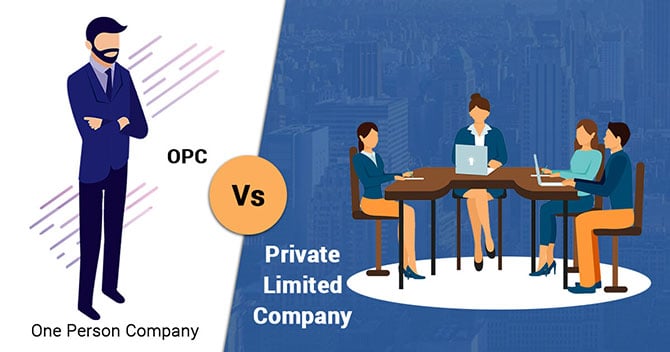
OPC vs Private Limited in 2025: The Ultimate Guide for Indian Entrepreneurs
Choosing the right business structure is one of the most important decisions for any entrepreneur in India. In 2025, two of the most popular legal structures are the One Person Company (OPC) and the Private Limited Company (Pvt Ltd).
Many Indian entrepreneurs search for “OPC vs Private Limited in India” to understand which structure offers better compliance, taxation benefits, and legal recognition. This blog by Legal Hind will give you a complete guide on the difference between OPC and Private Limited, their advantages, disadvantages, and which is best for your business journey.
What is an OPC in India?
An OPC (One Person Company) was introduced under the Companies Act, 2013 to help solo entrepreneurs enjoy limited liability and corporate benefits without needing multiple shareholders.
Shareholders: Only one required
Directors: Minimum 1
Liability: Limited to the capital invested
Best For: Solopreneurs, freelancers, consultants, and small traders
Example: A freelance designer or independent consultant can register an OPC to enjoy legal recognition and liability protection.
What is a Private Limited Company in India?
A Private Limited Company (Pvt Ltd) is the most preferred legal structure for startups and SMEs in India. It offers credibility, scalability, and funding opportunities.
Shareholders: Minimum 2, maximum 200
Directors: Minimum 2
Liability: Limited liability
Best For: Startups, SMEs, and businesses aiming to raise funds and expand
Example: A tech startup planning to raise investment from VCs would benefit from registering as a Pvt Ltd.
OPC vs Private Limited in India: Key Differences (2025)
| Feature | OPC (One Person Company) | Private Limited Company |
|---|---|---|
| Ownership | Single owner | Minimum 2 owners |
| Compliance | Moderate | Higher, with board meetings & annual filings |
| Taxation | Corporate tax (25% for turnover ≤ ₹400 cr) | Same, with possible startup exemptions |
| Fundraising | Limited options | Preferred by VCs, angels, banks |
| Credibility | Good for small scale | High credibility for growth |
| Conversion | Can convert into Pvt Ltd | Already growth-friendly |
Legal Recognition in India (2025)
Both OPC and Pvt Ltd are recognized under the Companies Act, 2013. However:
OPC has fewer compliance requirements, making it easier for individuals.
Private Limited must conduct annual general meetings, maintain records, and follow stricter compliance rules.
In 2025, MCA’s online compliance portals have made filing easier for both OPC and Pvt Ltd.
Taxation in OPC vs Private Limited
OPC Taxation: OPCs are taxed as corporate entities. They do not receive special startup tax exemptions.
Pvt Ltd Taxation: Pvt Ltd companies enjoy the same corporate tax rates but can qualify for Startup India exemptions, angel tax relief, and ESOP benefits.
Fundraising & Business Growth
OPC: Raising equity or VC funding is very difficult. Suitable only for small businesses.
Pvt Ltd: Highly preferred for venture capital, angel investors, and bank loans, making it the go-to option for startups aiming to scale.
Which Is Better in 2025?
Choose OPC if: You are a solo entrepreneur, consultant, or freelancer who wants limited liability with minimal compliance.
Choose Pvt Ltd if: You are a startup founder or SME planning to raise funds, scale operations, and expand nationwide or globally.
How Legal Hind Helps Entrepreneurs
At Legal Hind, we simplify company registration in India for entrepreneurs. Our services include:
Expert consultation on OPC vs Private Limited in India
End-to-end MCA registration support (100% online process)
Legal drafting of MoA, AoA, and compliance documents
Ongoing taxation and compliance support for smooth business operations
With Legal Hind, starting your OPC or Pvt Ltd company becomes easy, affordable, and legally secure.
Conclusion:
When it comes to OPC vs Private Limited in India (2025), there is no one-size-fits-all answer. The right choice depends on your business goals.
-
If you want simplicity and independence, OPC is a great choice.
-
If you want credibility, scalability, and funding opportunities, go with a Pvt Ltd.
Whichever path you choose, Legal Hind ensures your registration and compliance process is handled by experts, so you can focus on your entrepreneurial journey.
Frequently Asked Questions (FAQs):
Which is better for entrepreneurs in India, OPC or Private Limited?
OPC is better for solo entrepreneurs, while Pvt Ltd is better for startups planning to scale.
Can an OPC be converted into a Private Limited Company?
Yes, once turnover crosses ₹2 crore or paid-up capital exceeds ₹50 lakh, OPC conversion becomes mandatory.
Which company is more credible for investors?
Private Limited is more credible since investors prefer multiple shareholders and corporate governance.
What are the compliance requirements for OPC vs Private Limited?
OPC has lighter compliance, while Pvt Ltd requires annual returns, board meetings, and statutory filings.
Is an OPC cheaper to maintain than a Pvt Ltd?
Yes, OPC has lower compliance costs, making it cheaper for small businesses.
Can NRIs or foreigners register an OPC in India?
No, OPC is only available to Indian residents. Foreigners can invest in Pvt Ltd companies.
Which structure is better for raising funds in India?
Private Limited is the preferred structure for raising venture capital, angel investments, and bank loans.
Why choose Legal Hind for OPC or Pvt Ltd registration?
Because Legal Hind offers expert guidance, quick online registration, legal drafting, and compliance support at affordable costs.